How to Find Old Shares in India in Your Parents' Name
Found old share certificates in a parent's name? How to trace the holding, search IEPF records, check RTA and demat records, and claim them.
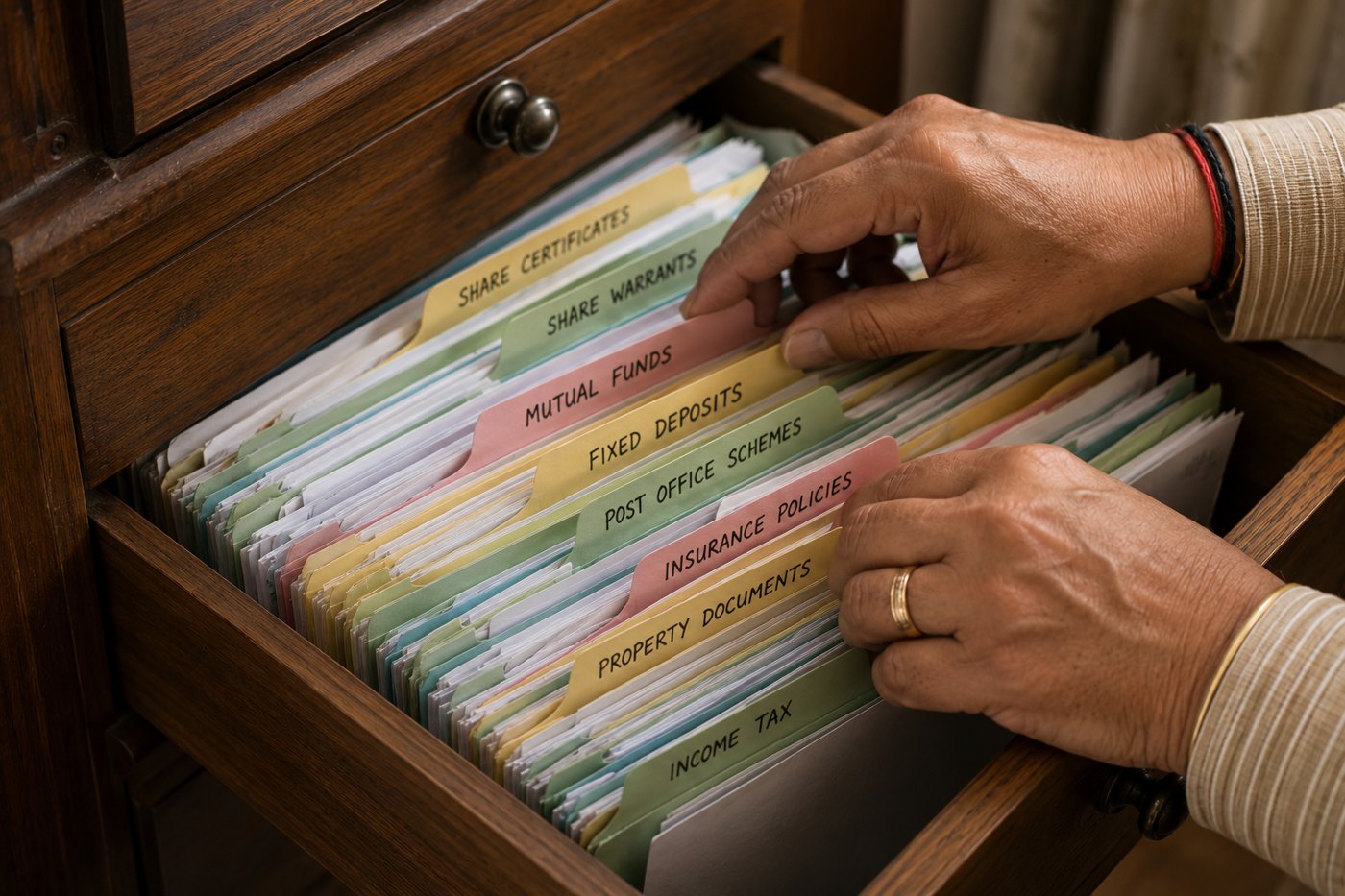
Many families discover old investments only years later.
It often happens while sorting through old documents, cleaning cupboards or reviewing financial papers after a parent passes away. Among old files, people sometimes come across:
- Physical share certificates
- Old dividend warrants
- Bank statements showing dividend credits
- Letters from companies or Registrars and Transfer Agents (RTAs)
At that point, a natural question arises:
How can we find out whether these shares still exist and where they are held today?
In many cases, investments made decades ago can still be traced. The first step is to gather whatever information is available and establish the current status of the shareholding.
Why Old Shares Often Go Unnoticed
During the 1980s and 1990s, many investors held shares in physical certificate form. Unlike today’s demat system, investors received paper certificates and dividend payments or communications through physical records.
Over time, several things could happen:
- Investors changed addresses and stopped receiving company communications
- Companies merged or changed names
- Share certificates were misplaced
- Bank or KYC details became outdated
- Family members were unaware of the investments
Where dividends on shares remain unclaimed for seven consecutive years, the corresponding shares may be transferred to the Investor Education and Protection Fund Authority (IEPF Authority) in accordance with the applicable provisions.
This is one reason families sometimes discover an old investment only to find that the shares have already been transferred to IEPF.
Related Guide: How to Check If Your Shares Are Transferred to IEPF →
Step 1 – Look for Clues in Old Documents
The easiest place to start is with the documents already available.
Useful records may include:
- Old share certificates
- Dividend cheques or warrants
- Company annual reports
- Old bank statements showing dividend credits
- Allotment letters
- Letters from companies or RTAs
- Folio, certificate or distinctive numbers
Even partial information can be useful.
For example, an old dividend warrant containing the shareholder’s name, company name and folio details may provide enough information to begin tracing the investment.
Step 2 – Search the IEPF Records
If dividends remained unclaimed for several years, the shares may have been transferred to IEPF.
The official IEPF search facility can help determine whether shares or unpaid amounts relating to the investor have been transferred.
Depending on the records available, information such as the following may assist with the search:
- Investor name
- Company name
- Folio or other available shareholding details
- Other historical investor information
If the shares are identified in IEPF, they may be eligible to be claimed through the prescribed recovery process.
Related Guide: How to Recover Shares from IEPF – Step-by-Step Process →
Step 3 – Check Old Demat Records
Sometimes the shares may already have been converted into demat form.
If your parents had a demat account, old account statements, broker records or other available depository records may help identify investments held electronically.
These records can also provide useful information such as the company name, quantity of shares and other details needed for further verification.
Step 4 – Contact the Company or Its RTA
If you know the company name but cannot establish the current status of the shares, the company’s Registrar and Transfer Agent may be another useful source of information.
Depending on the available records, the company or RTA may be able to help establish:
- The status of the old folio
- Whether the shares remain associated with the shareholder’s records
- Whether shares or unpaid amounts were transferred to IEPF
- Whether the shareholder records require updating
- Whether the company has undergone a merger, name change or other corporate action affecting the holding
Providing whatever historical information is available can make the tracing process easier.
Step 5 – Determine the Next Step
Finding the shares is only the first part of the process.
Once the current status of the holding is established, the next step depends on the circumstances.
The case may involve:
- Transmission if the registered shareholder has passed away
- Dematerialization if eligible shares continue to be held in physical form
- IEPF recovery if the shares have been transferred to IEPF
- Duplicate / lost share documentation where original certificates are unavailable
- KYC or record corrections where shareholder details do not match current records
Some cases may involve more than one of these processes.
When Tracing Old Shares Becomes More Complex
Certain cases require additional investigation before the appropriate process can be identified.
This may happen where:
- The original shareholder has passed away
- Multiple legal heirs are involved
- Original share certificates or folio details are missing
- There are differences in the shareholder’s name or other records
- The company has merged, changed its name or undergone other corporate changes
- Multiple companies or folios need to be traced
- Family members or legal heirs reside outside India
In such situations, it is useful to first establish the available shareholding and claimant information before determining whether transmission, dematerialization, IEPF recovery or another process is required.
Need Help Tracing Old Shares?
If you have found old share certificates, dividend records or other investment documents in a parent’s name and are unsure about their current status, a preliminary review can help trace the holding and identify the appropriate next steps.
Related Guides
Sources & References
- Ministry of Corporate Affairs / IEPF Authority – Companies Act, 2013 and applicable IEPF Rules
- Securities and Exchange Board of India (SEBI) – Investor guidance relating to physical securities, dematerialization and transmission
- Official IEPF Portal – Investor search and claim-related information
Have a similar case?
If something here describes your situation, we can guide you through the next steps. No obligation, just a clear plan.